
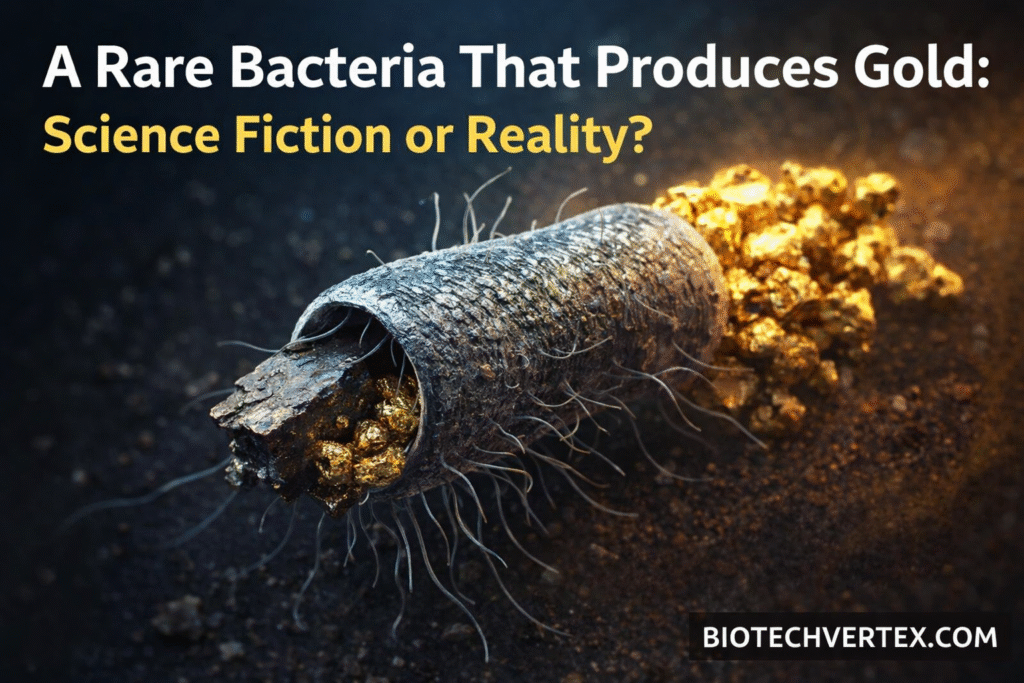

It is going to sound unbelievable, almost like a science scene from a sci-fi movie—but believe me, it’s real. Scientists from Germany and Australia have discovered a rare type of bacteria that can consume toxic metals and release tiny nuggets of pure 24-karat gold. Yes, you heard it right; this microscopic organism literally turns poison into a gold treasure. Their work helps explain how tiny microbes may have played a role in shaping natural gold deposits on Earth over millions of years.
Nature, it seems, has been practicing alchemy long before humans even dreamed of it.
Meet the “Gold-Pooping” Bacteria
The bacterium behind this strange talent is called Cupriavidus metallidurans. You won’t find it in your kitchen or garden. It survives in some of the harshest environments on Earth—deep inside metal-rich mines, where toxic compounds would instantly kill most living things.
Instead of dying, this bacterium adapts within the critical environment. It has learned how to protect itself from deadly metals in a way that’s nothing short of extraordinary.
So… How Does a Bacteria Make Gold?
Gold doesn’t always exist as shiny nuggets underground. Often, it’s present in toxic chemical forms that are harmful to living organisms. When Cupriavidus metallidurans encounters these toxic gold compounds, it treats them like a threat. To survive, the bacteria:
- Absorbs the toxic gold
- Chemically converts it into a harmless form
- Pushes it out of its system as solid, pure gold
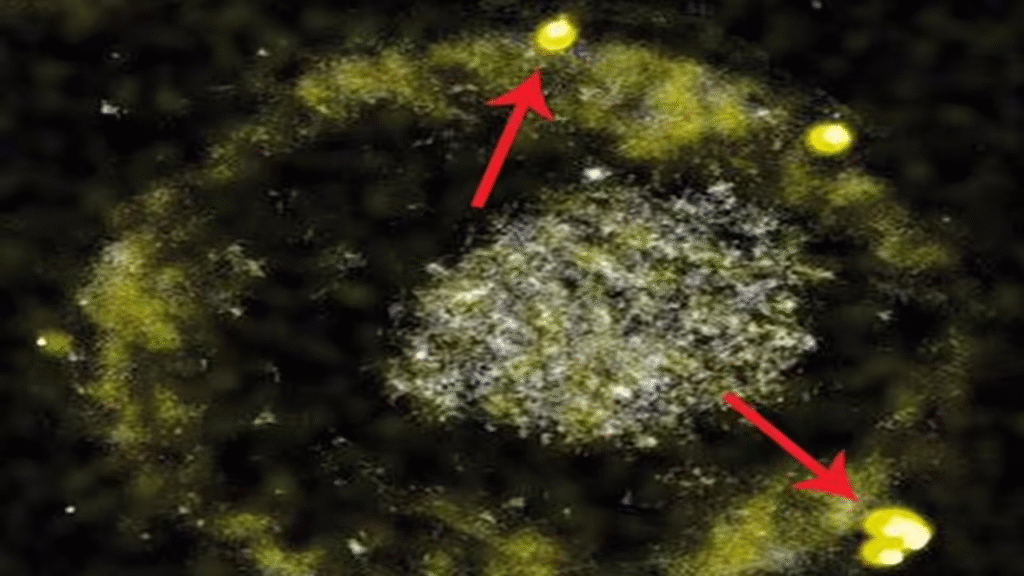
In simple terms, gold is the bacteria’s waste product—a biological detox process that just happens to create something incredibly valuable.
Why This Discovery Matters
This isn’t just a weird science fact—it has real importance.
1. A Cleaner Way to Think About Mining
Traditional gold mining is destructive and polluting. Learning how bacteria naturally process metals could lead to more sustainable and eco-friendly mining methods in the future.
2. Cleaning Up Polluted Environments
Because this bacterium survives in highly toxic areas, it could help in bioremediation—cleaning up soil and water contaminated with heavy metals.
3. Understanding Earth’s Natural Processes
Scientists now believe microbes like this may help explain how gold forms and moves in nature, something that has puzzled researchers for decades.
Future Reference: Can We Start Farming Bacteria for Gold?
I think, not quite.
While the idea is exciting, the bacteria produce very tiny amounts of gold, and the process is extremely slow. So no, this won’t replace gold mines anytime soon. But what it does offer is something just as valuable—knowledge. And knowledge often leads to better and cleaner technologies.
Nature: The Original Alchemist
For centuries, humans have tried to turn base metals into gold and failed. Meanwhile, nature quietly succeeded—using bacteria that are invisible to the naked eye.
This discovery is a reminder that some of the most incredible solutions already exist around us, hidden in places where we rarely look out.
Final Thoughts
A bacteria that eats toxic metal and poops pure gold may sound bizarre, but it’s a powerful example of how intelligent and adaptable life can be—even at the microscopic level.
As scientists continue to study these microbes, they may unlock new ways to mine responsibly, clean polluted environments, and better understand our planet.
Sometimes, the smallest organisms really do hold the biggest secrets.