

Cancer is not only a disease, but it also causes physical, mental, emotional, and financial damage. And its treatment is quite bound. Chemotherapy is one of them. But the drawback is that the potent drugs of chemotherapy not only kill cancer cells but also kill healthy cells. The research continues in the field has discovered a loophole to destroy breast cancer. The researcher has discovered a potent venom from a bee that can kill breast cancer cells without damaging healthy cells.
Know what this venom is and how it is destroying cancer cells?
Bee Venom: Nature’s Unexpected Ally
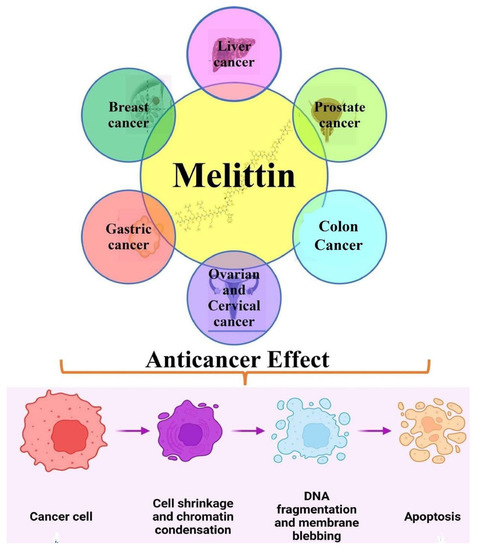
Honeybee venom, or apitoxin, is a complex bioactive mixture, which is mostly composed of melittin (approx. 50-60% of dry weight). Melittin is an amphipathic peptide of 26 amino acids long that can damage the cell membranes and interrupt their associated signaling pathways.
Researchers have explored whether melittin, alone or as part of bee venom, can selectively kill breast cancer cells, particularly the aggressive triple-negative (TNBC) and HER2-positive subtypes, with the advantage of no harm to healthy cells.
Research Insights:
In a study, honeybee venom and isolated melittin were tested on the TNBC line SUM159 and the HER2-enriched line SKBR3. Results showed that both agents suppressed ligand-induced phosphorylation of EGFR and HER2, thereby blocking downstream proliferative signaling. Importantly, melittin alone demonstrated stronger cytotoxic effects than whole venom, selectively killing cancer cells with minimal impact on normal ones.
Another study reported that a specific concentration of venom eradicated breast cancer cells within 60 minutes while leaving surrounding healthy cells mostly intact. This rapid action is attributed to melittin’s ability to perforate the cancer cell membrane.
Dose Response and Mechanism
In the TNBC line MDA MB 231, bee venom with higher melittin content induced apoptosis at as low as 0.47 μg/mL, significantly lower than doses damaging normal cells. In another model (4T1 breast cancer), melittin showed dose and time-dependent cytotoxicity and upregulated apoptotic genes such as Drp1 and Mfn1.
Combining melittin with docetaxel, a standard chemotherapeutic drug, in TNBC mouse models produced a potent synergistic anti-tumor effect, far greater than either agent alone. Other combinations with CNS repurposed drugs (fluoxetine, sertraline, etc.) also exhibited enhanced cytotoxicity in MCF 7 breast cancer cells.
From Lab to Mouse: In Vivo Evidence
A notable preclinical study formulated melittin loaded niosomes (nanovehicles) to deliver melittin more safely and precisely. In both 4T1 and SKBR3 tumor bearing mice, the niosomal formulation produced superior anticancer effects compared to free melittin—demonstrating apoptosis induction, reduced invasion and migration, and gene expression changes favoring cell death—without significant liver or kidney toxicity.
Looking Ahead: The Road to Treatments
If further research supports safety and efficacy in humans, melittin-based therapies could become part of future breast cancer treatments—especially for hard-to-treat subtypes like TNBC or HER2+ tumors. Nanoformulations (niosomes, liposomes, immunoliposomes conjugated with targeting antibodies) are under development to deliver melittin directly to tumors, minimize off-target toxicity, and potentially allow lower effective dosing.
Additional investigations should clarify:
• Precise molecular mechanisms of how melittin disrupts cancer-specific signaling.
• Optimal delivery systems to maximize selectivity and minimize harm.
• Long term toxicity profiles, especially allergic risks.
• Synergistic regimens, combining melittin with existing therapies.
• Ultimately, rigorous clinical trials to test safety and efficacy in humans.
Final Thoughts
Honeybee venom and its peptide melittin is showing remarkable anticancer activity for the treatment of breast cancer. It may be proven as a reliable option for destroying malignant cells rapidly and selectively and enhancing chemotherapy effects while sparing healthy tissue. But it is still in preclinical studies of breast cancer.
But it’s critical to know that lab success doesn’t guarantee treatment viability. Much more research is essential before melittin enters human therapy. Until then, these findings remain a fascinating glimpse into nature’s pharmacological potential, urging us to protect biodiversity and maintain cautious optimism for natural compounds in oncology.
Reference:
https://pmc.ncbi.nlm.nih.gov/articles/PMC10964279
http://medicalnewstoday.com/articles/honeybee-venom-kills-aggressive-breast-cancer-cells