


Introduction — A Biotechnologist’s Perspective
As a biotechnologist and medical writer passionate about safeguarding human health, I never imagined writing about plastic particles in reproductive fluids. Yet here we are, microplastics (MPs), these harmful fragments under 5 mm, have now entered human semen and ovarian follicular fluid. This has raised the demand for attention for human reproductive health and fertility.
The Unsettling Discovery
Recent research published in Human Reproduction and presented at the ESHRE (European Society of Human Reproduction and Embryology) meeting has revealed the presence of microplastics in 55% of male seminal fluid samples and 69% of female follicular fluid samples.
Specifically, in semen, PTFE (Teflon) was most common (41%), and also polystyrene, PET, polyamide, and polyurethane. Another study confirmed the presence of plastic in 14 out of 18 follicular fluid samples, with concentrations averaging 2,191 particles per milliliter (range: 0–7,181 particles/mL), size approx. 4.5 µm.
What We Know—and What We Don’t
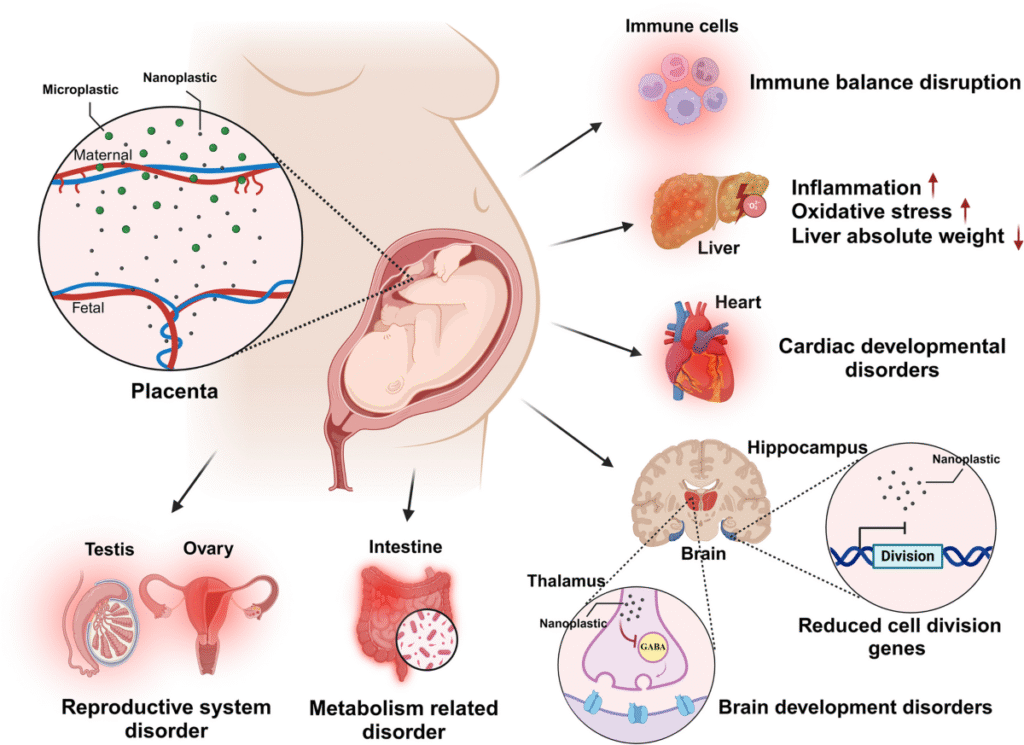
Human evidence is still in its earliest stages, with no conclusive associations yet. However, animal models reveal a concerning picture: microplastics can induce inflammation, oxidative stress, DNA damage, and endocrine disruption, affecting both spermatogenesis and oocyte quality.
In a single in vitro mouse study, Microplastics of different polymer types inhibited oocyte maturation. For males, human semen samples indicated decreased sperm progressive motility among those exposed to PET microplastics, although more definitive evidence is required.
Why It Matters: Fertility in the Age of Plastic
In a world already struggling with falling fertility rates, discovering microplastics infiltrating our reproductive fluids shines a sobering light on environmental pollutants as likely culprits. MPs can serve as carriers that transport bisphenol, phthalates, PFAS, and other endocrine-disrupting chemicals deep within reproductive tissues.
Low sample numbers in existing human studies call for restraint. However, as some scientists point out, presence is not necessarily impact—but it is a red flag calling for further investigation.
Biotech Opportunities & Future Research Frontiers
For biotech visionaries, this is a call to action. Key frontiers include:
• Highly sensitive detection techniques (which includes LD-IR spectroscopy, SEM-EDX, Py-GC/MS) have been standardized for MPs as small as nanoplastics.
• Mechanistic studies: What is the mechanism that MP induces changes to the blood-testis barrier, steroidogenesis, or oocyte development?
• Mitigation strategies: Are there antioxidants like anthocyanins (found in brightly colored fruits and flowers) that can reduce or inhibit MP-related reproductive harm? At this stage, there is initial evidence from animal models which is looking very promising.
• Clinical trial results: Do lifestyle interventions (e.g., lower plastic use products such as exposure to one use bottles, rapid heating, or wearing natural fibers for clothing and personal use) improve fertility?
Steps You Can Take Individually
Until better science can be done, exercise caution and moderation:
• Use glass, stainless steel or ceramic containers instead of plastic, ideally if you are heating the container, or if storing a hot food item.
• Reduce plastic water bottles, turn off the tap for wash hands rather than use a bottle, and reduce single reuse plastics.
• Prefer natural fibers, rather than synthetics, for clothing and personal use.
• Eat antioxidant foods- berries, nuts, leafy greens- since they may offer some protection.
Conclusion — A Small Warning, A Big Opportunity
As a biotech journalist, I look at these findings as a reminder that microplastics are not merely small pieces of trash suspended in our world—they are sneaky travelers who might even affect the most sensitive aspect of human existence: our capacity to reproduce. We don’t have to freak out yet, but this finding presents us with a compelling reason to move toward a better solution regarding the use of microplastics. It’s an opportunity for science and biotechnology to delve deeper, identify solutions, and safeguard reproductive health in a plastic-infused world that’s growing by the day.


mslusndezwdlmfjqoodooyzsveiusg
c3pf0a
vkmvqrfoejotgjgyxesdkkinmwjrsi
tmozggxiyugtkfteqzvphgfyeirkgz
wgzljlvtimyzpwnwvryipkdqltktpe
I had to give gbgbet444 a go. Pretty decent experience, so far so good. Look for yourself gbgbet444.